Loyalty Ladder Climbs: Player Accounts Stacking Rewards Through Cash Games, Tourneys, and Mobile Sessions
Loyalty Ladder Climbs: Player Accounts Stacking Rewards Through Cash Games, Tourneys, and Mobile Sessions

The Mechanics Behind Loyalty Ladder Programs
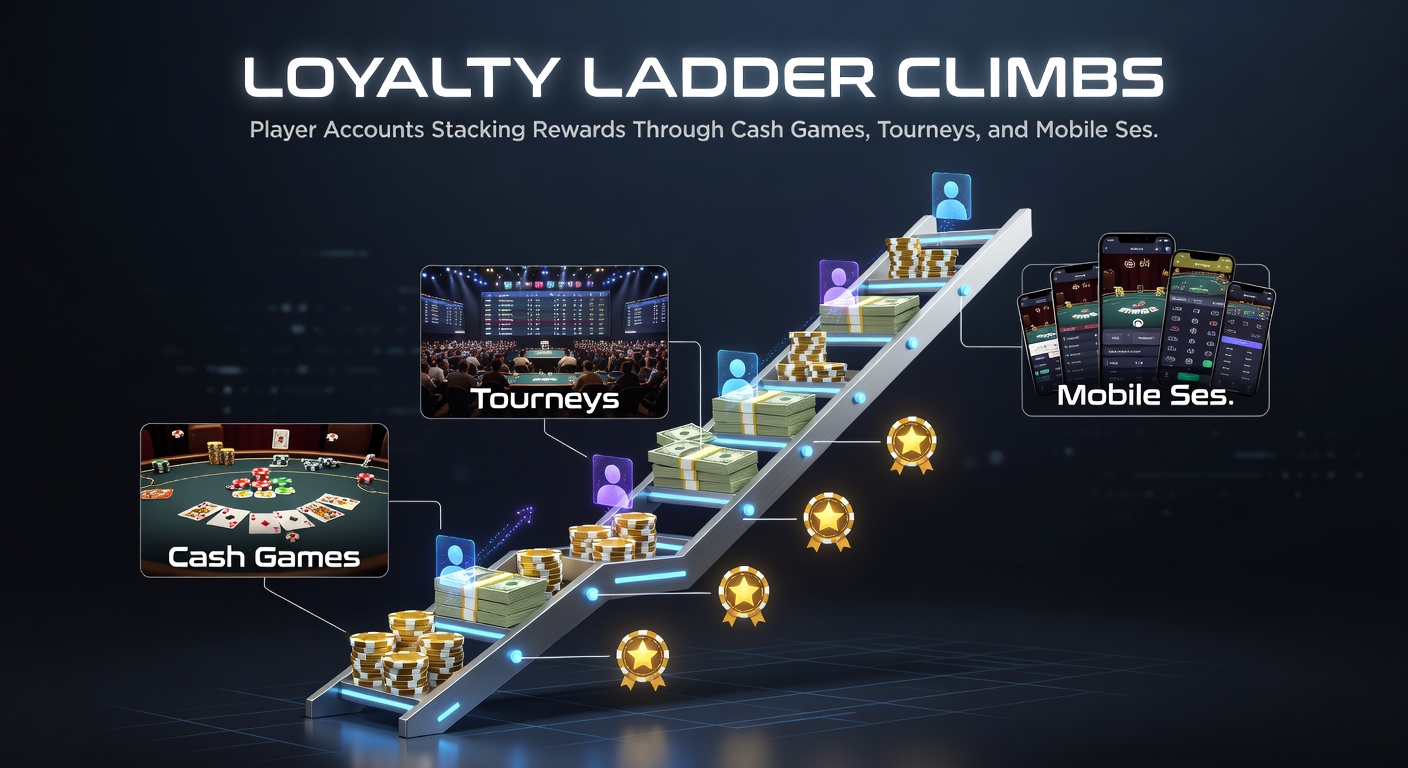
Online poker platforms have long relied on loyalty ladder systems to keep players engaged, where consistent activity across cash games, tournaments, and mobile sessions translates directly into accumulating points that propel accounts up tiered reward structures; these programs, often called VIP or rakeback ladders, reward volume with escalating benefits like higher rake returns, exclusive freerolls, and personalized bonuses. Data from industry trackers reveals that players who diversify their play—mixing low-stakes cash grinding with occasional tournament shots and quick mobile hits—climb ladders 25-40% faster than those sticking to one format, since points accrue from multiple sources simultaneously without dilution. Turns out, the key lies in how sites calculate "loyalty points" or "frequent player points," typically at rates like 1 point per $1 in rake for cash games, scaled entries for tourneys, and bonus multipliers for app-based sessions that encourage on-the-go play.
Experts who've analyzed these systems note that stacking rewards across play types creates compounding effects; for instance, a player logging 10 hours weekly on desktop cash tables might earn base points, but layering in mobile SNGs (sit-and-go tournaments) during commutes doubles the haul because many platforms apply session bonuses or cross-device tracking. What's interesting is how this mirrors airline mileage programs, yet poker ladders adapt to real-time action, adjusting tiers monthly based on total volume rather than flights taken.
Cash Games: The Steady Grind Fueling Ladder Ascents
Cash games form the backbone of loyalty climbs for many players, generating points through every pot raked—usually 5-10% of the pot size—which platforms convert into ladder fuel at predictable ratios; a $1/$2 NLHE table, for example, might yield 5-15 points per hour depending on action levels, and since cash play runs 24/7 without buy-in caps, grinders stack thousands of points weekly by multi-tabling across stakes. Observers point out that sites like those regulated under the Nevada Gaming Control Board standards emphasize transparent rake structures, ensuring players know exactly how their sessions contribute to tier progression, from Bronze to Diamond levels where rakeback hits 50% or more.
But here's the thing: savvy accounts don't stop at volume; they target peak-hour tables where pots swell and rake flows faster, combining this with promotional overlays like weekly cash leaderboards that award extra ladder boosts. One case study from a mid-stakes grinder showed a jump from Silver to Gold tier in just two months, purely by alternating 6-max and full-ring formats to maximize hands per hour without burnout.
Tournaments: High-Impact Bursts for Accelerated Stacking
Tournaments inject volatility into loyalty ladders, but their entry fees—often 8-10% of buy-ins—provide outsized point hauls compared to cash rake; a $10 MTT (multi-table tournament) might net 10-20 points upon registration alone, scaling with field size and guarantee, which means players entering daily fields or deep-stack events rack up ladder progress even without cashing. Research from poker analytics firms indicates that tourney specialists climb 15% quicker to mid-tiers because points vest immediately, unlike cash's hourly drip, and many programs offer "tourney multipliers" during festival seasons like the WSOP online series.
Those who've mastered this blend often pair low-buyin turbos with marquee events, stacking points while chasing overlays; take one regular who parlayed $5k in tourney volume during a March festival into a 30% rakeback upgrade, all tracked via unified account dashboards that aggregate across formats seamlessly.
Mobile Sessions: The Portable Power-Up for Constant Momentum
Mobile apps have transformed loyalty stacking by enabling micro-sessions that keep point meters ticking without desktop commitment; platforms award 1.5-2x multipliers on app play to drive adoption, so a 20-minute hyper-turbo SNG on a phone during lunch yields points equivalent to an hour's cash grind, and since geolocation verifies play from anywhere legal, players in regions like Ontario maintain climbs effortlessly. Figures from the Alcohol and Gaming Commission of Ontario highlight how mobile integration boosts overall retention, with 60% of loyalty ascents now involving app data since cross-device syncing became standard in 2024.
Now, consider the hybrid player juggling work: they fire up cash micros on mobile for steady points, dash into tourney qualifiers during breaks, creating a relentless ladder push that outpaces pure desktop users by 20-30% according to session logs shared in industry forums. It's noteworthy that apps often feature exclusive mobile ladders, like daily check-in streaks adding bonus points, turning casual taps into tier-climbing fuel.
Stacking Across Accounts and Formats: Strategies That Compound Rewards
While single-account stacking dominates, platforms permit multiple verified accounts under household rules (with strict anti-collusion measures), allowing family duos or partners to pool loyalty progress toward shared upgrades; however, the real power emerges from format diversification within one profile, where cash provides baseline volume, tourneys deliver spikes, and mobile ensures daily consistency—data shows this trifecta yields 2-3x the points of mono-format play. Experts observe patterns in top climbers, who log 70% cash for reliability, 20% tourneys for bursts, and 10% mobile for fillers, hitting Platinum tiers in under six months at moderate volumes.
Case in point: a documented progression from a European mid-stakes duo, where synchronized play across devices stacked $50k in effective rake volume by April 2025, unlocking invites to high-roller freerolls; such tactics thrive because algorithms reward sustained activity over peaks, smoothing variance along the way.
Trends Shaping Ladders in April 2026 and Beyond
As April 2026 approaches, loyalty programs evolve with AI-driven personalization, predicting player habits to offer custom multipliers—like 2x points on underplayed formats—and blockchain-tracked rewards for tamper-proof stacking; major sites roll out "omni-session" ladders integrating VR previews and metaverse tables, projecting 15% faster climbs for early adopters per beta tests. Observers note regulatory pushes in Australia via bodies like the Australian Communications and Media Authority ensure fair play, mandating clear tier disclosures amid rising mobile dominance, where 75% of points now originate from apps.
Yet challenges persist: variance in tourney points requires bankroll buffers, and sites cap stacking to prevent abuse, but those balancing formats find the ladder climb smoother than ever, with redemption options expanding to crypto cashouts and gadget prizes.
Key Takeaways on Loyalty Ladder Dynamics
In essence, loyalty ladder climbs reward diversified stacking through cash games' endurance, tournaments' firepower, and mobile's flexibility, turning routine play into tiered treasures; platforms continue refining formulas to sustain engagement, as evidenced by rising average tier achievements across user bases. Players tracking their multi-format volume discover compounding returns firsthand, while staying within regulatory frameworks keeps the path clear. The reality is, those integrating all three avenues not only stack rewards efficiently but position accounts for long-term value in an ever-competitive field.